

 Feed back
 Privacy Policy
Vedic astrology, also known as Jyotish Shastra, is an ancient Indian system of astrology deeply rooted in the Vedas—particularly the Rigveda and Atharvaveda. Originating over 5,000 years ago, it forms a critical component of Hindu philosophy and spiritual practice, offering insights into human destiny through celestial patterns. Unlike modern astronomy, which focuses solely on physical observation, Vedic astrology integrates metaphysical principles to interpret planetary influences on individual lives and global events. The term "Vedic" derives from "Veda," meaning knowledge, and "Jyotish" translates to "science of light," reflecting its purpose: to illuminate life’s path using cosmic wisdom.

In recent years, there has been a notable rise in global interest in Vedic astrology, particularly regarding long-term forecasts for specific years such as Astrology 2026. This growing attention stems from increasing awareness of holistic well-being, karmic cycles, and the desire for deeper self-understanding amid rapid societal changes. Many individuals are turning to Vedic systems not only for personal guidance but also for predicting major life transitions—including career shifts, health considerations, and relationship milestones. This guide aims to provide clear, factual, and culturally grounded insights into key aspects of Vedic astrology, including the Vedic astrology birth chart, planetary movements in 2026, comparisons with Western astrology, remedies for planetary imbalances, and digital tools for Kundli matching for marriage online.
The foundation of Vedic astrology lies in the Vedic astrology birth chart, commonly referred to as a Kundli. This chart is a two-dimensional representation of the sky at the exact moment of an individual’s birth, calculated based on time, date, and geographical location. It consists of twelve houses (Bhavas), each governing different areas of life—from identity and wealth to relationships and spirituality. Within these houses reside nine primary celestial bodies (Grahas): the Sun, Moon, Mars, Mercury, Jupiter, Venus, Saturn, and the lunar nodes Rahu and Ketu. These planets occupy one of the twelve zodiac signs (Rashis) and 27 lunar constellations (Nakshatras), adding layers of nuance to interpretation.
Accuracy in constructing a birth chart hinges on precise birth data. Even a few minutes' discrepancy in birth time can shift the Ascendant (Lagna), altering the entire chart structure. The Lagna represents the rising sign on the eastern horizon at birth and determines the first house placement, shaping personality traits and life direction. Equally significant is the Moon sign, which reflects emotional disposition and inner psyche. While Western astrology often emphasizes the Sun sign, Vedic tradition prioritizes both Lagna and Moon sign for comprehensive analysis. Professional astrologers use software like Jagannatha Hora or Parashara’s Light to generate accurate charts, ensuring reliable birth chart interpretation for predictive purposes.
A fundamental distinction between the difference between Western and Vedic astrology lies in their zodiac frameworks. Western astrology employs the tropical zodiac, which aligns with Earth’s seasonal cycles and equinoxes. In contrast, Vedic astrology uses the sidereal zodiac, anchored to fixed star positions. Due to axial precession—a slow wobble in Earth’s rotation—the tropical and sidereal zodiacs have diverged by approximately 24 degrees over centuries, a correction known as Ayanamsa. Most Vedic astrologers use the Lahiri Ayanamsa, officially adopted by India’s Calendar Reform Committee in 1955.
This divergence means that an individual’s sun sign in Western astrology may differ from their Vedic sun sign. For example, someone born under Leo in Western astrology might be Cancer in Vedic terms. Beyond zodiac systems, the two traditions differ in methodology. Vedic astrology places greater emphasis on dasha periods—predictive timelines governed by planetary rulership—which allow for event-specific forecasting up to decades in advance. Western astrology relies more on transits and progressions within a natal chart. Additionally, Vedic astrology incorporates Nakshatras and Ashtakoota compatibility for marriage, features absent in most Western practices. Research conducted by the Council of Scientific and Industrial Research (CSIR) in India suggests that sidereal-based predictions show higher consistency in long-term life event correlation, though scientific validation remains limited.
The year 2026 will witness several significant planetary transits that may influence global and personal dynamics. Jupiter, the planet of wisdom and expansion, will transit through Gemini (Mithuna Rashi), enhancing communication, education, and intellectual pursuits. However, its aspect on Pisces may create tension for individuals with sensitive placements in water signs. Saturn will remain in Pisces until mid-2026 before transitioning into Aries, marking a shift from introspective restructuring to disciplined action. The Rahu-Ketu axis will continue its journey through Aries and Libra, potentially triggering upheavals in leadership, diplomacy, and personal relationships.
These external transits interact with individual dasha periods—such as Vimshottari Dasha, a 120-year cycle divided among nine planets—to determine personal experiences in planetary influences 2026. For instance, someone undergoing their Jupiter Mahadasha during this period may benefit significantly from opportunities in higher learning or international travel. Conversely, those in a challenging Saturn phase might face delays or health concerns requiring resilience.
To mitigate adverse effects, Vedic tradition prescribes specific Vedic astrology remedies for planets. These include wearing gemstones corresponding to benefic planets (e.g., yellow sapphire for Jupiter), chanting mantras (like the Guru Beej Mantra for Jupiter), performing yajnas (fire rituals), and observing fasts on auspicious days (e.g., Saturdays for Saturn). Such remedies aim not to alter fate but to strengthen planetary energies and promote balance. Institutions like the Bharatiya Vidya Bhavan and the Institute of Vedic Astrology offer certified courses on remedial measures, emphasizing ethical application without superstition.
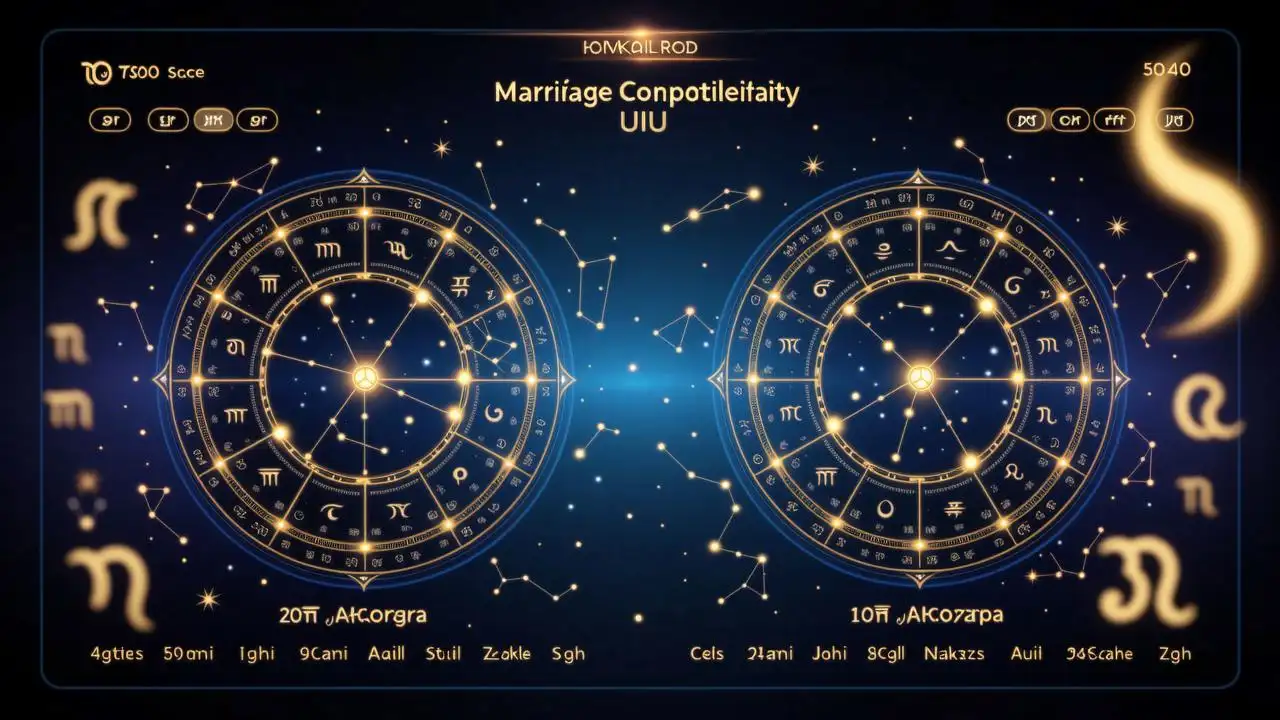
In Indian culture, marriage is considered a sacred union influenced by karmic alignment. One of the most enduring practices in arranged marriages is Kundli matching for marriage online, based on the Ashtakoota system. This method evaluates compatibility across eight parameters—Varna (spiritual level), Vashya (dominance), Tara (health), Yoni (sexual harmony), Graha Maitri (mental affinity), Gana (temperament), Bhakoot (emotional bond), and Nadi (genetic compatibility)—assigning a total of 36 points. A minimum score of 18 is generally required for approval, though higher scores (24+) indicate stronger marital harmony.
Modern technology has enabled automated platforms like Astrosage, Clickastro, and Kundali.com to offer instant marriage compatibility reports using algorithm-driven calculations. Users input birth details for both partners, and the system generates a match report within seconds. While convenient, these tools have limitations. They cannot assess nuanced factors like current dasha periods or mutual planetary afflictions (Doshas), such as Mangal Dosha (Mars-related conflict). Therefore, while digital matching provides a preliminary assessment, consultation with a qualified Vedic astrologer remains essential for accurate evaluation and personalized advice.
As we approach 2026, understanding the principles of Vedic astrology becomes increasingly valuable for informed decision-making. From interpreting your Vedic astrology birth chart to recognizing how planetary transits affect personal growth, this knowledge empowers individuals to navigate life with greater awareness. Recognizing the difference between Western and Vedic astrology helps clarify why many prefer the sidereal system for long-term forecasting. Practical applications—such as applying Vedic astrology remedies for planets during difficult periods or utilizing Kundli matching for marriage online tools—demonstrate the system’s relevance in contemporary life.
However, it is crucial to approach astrology responsibly. While it offers insightful guidance, it should not replace professional medical, financial, or legal advice. Readers are encouraged to consult certified practitioners affiliated with recognized institutions such as the Indian Council of Astrological Sciences (ICAS) or the Vedic Astrology Academy for personalized readings. Ultimately, the goal of Astrology 2026 insights is not determinism but self-awareness—using celestial wisdom as a mirror for reflection, growth, and intentional living.
Disclaimer: The content related to Astrology 2026 in this article is for reference only and does not constitute any professional advice in any related field. Readers should carefully assess their own circumstances and consult qualified professionals when necessary. The author and publisher of this article are not liable for any consequences arising from any actions taken based on the content of this article.
Ravi Shankar
|
2025.12.24


